Booting vs Towing Houston: Side‑by‑Side Comparison and Decision Framework
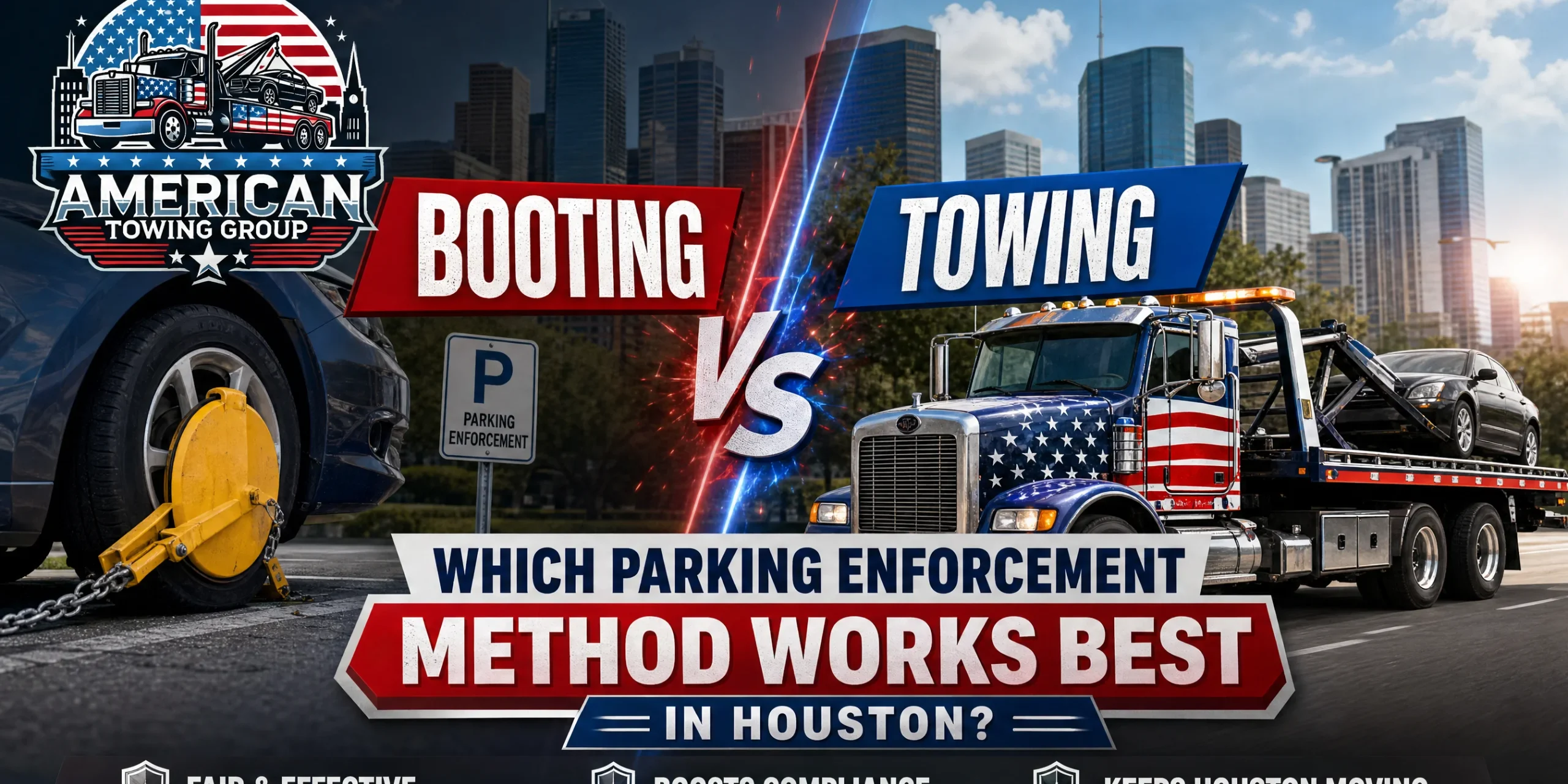
Booting vs Towing Houston: Which Parking Enforcement Method Works Best?
If you manage parking for an apartment community, HOA, or mixed-use property in Houston, you’ve likely weighed booting versus towing more than once. Booting vs Towing Houston decisions come down to compliance, safety, cost, resident experience, and what local rules require. This guide explains both vehicle immobilization (booting) and towing in plain language, compares the pros and cons, and offers a practical framework to help Houston property managers pick the right fit for their lots—with clear, compliant steps you can act on.
Booting vs Towing in Houston: The Essentials
What is vehicle immobilization (booting)?
- Booting is vehicle immobilization using a clamp on a wheel to keep a car from moving until the owner pays a fee or resolves the violation.
- It keeps the vehicle on-site, which often leads to faster owner retrieval.
- Consider it when the goal is short-stay control or rapid owner contact and the space itself isn’t urgently needed.
What does towing involve on private property?
- Towing removes the vehicle from the property to an authorized storage facility.
- It immediately frees the space and restores access when a vehicle blocks drive lanes, fire lanes, gates, dumpsters, or reserved resident spots.
- It is typically a stronger deterrent for repeat violators and more serious infractions.
Houston and Texas compliance basics to verify before you enforce
- Before using any parking enforcement options, confirm current City of Houston and State of Texas requirements for notice, signage, patrol authority, fees, and retrieval processes (Texas towing and booting regulations (TDLR)).
- Ensure signage makes enforcement methods and violatable conditions clear (fire lanes, permit-only areas, visitor time limits).
- Verify you have documented property authorization and a written policy; keep it consistent, transparent, and accessible to residents and guests.
- Note: Laws and local rules change. Always verify current requirements with your legal counsel and the appropriate authorities before implementing or updating policies.
Booting vs Towing Houston: Side-by-Side Comparison of Pros, Cons, and Use Cases
Speed of resolution and deterrence
- Booting: Quick to apply, and the vehicle remains in place until addressed. It provides a moderate deterrent and works best in areas with shorter stays where the owner is likely nearby.
- Towing: Clears the space immediately and generally provides the strongest deterrence—especially for fire lanes, blocked access, and repeat offenders.
Resident/visitor experience and disruption
- Booting: Less disruptive if the space isn’t critically needed; the owner can resolve the issue on-site without traveling to a storage facility.
- Towing: More disruptive for the violator but restores fairness for residents waiting on reserved or ADA spaces and quickly resolves safety blockages.
Repeat violators vs first-time offenders
- Booting: Useful as a step for first-time or low-severity issues when education and rapid resolution are a priority.
- Towing: Effective for repeat violators who ignore warnings, vehicles with no permits in restricted areas, or when safety and access are compromised.
After-hours and safety considerations
- Booting: Requires safe, well-lit conditions for staff; the immobilized car still occupies the space overnight.
- Towing: Often preferable after hours or when vehicles create safety hazards; it removes the issue entirely and reduces the chance of confrontations in the lot.
Documentation, notifications, and transparency
- Both methods require thorough documentation: photos, timestamps, location, violation type, and personnel IDs.
- Provide clear instructions for retrieval or dispute handling. Real-time notifications to managers keep everyone aligned and prevent late-night surprises.
Costs and Operational Impacts
Direct and indirect costs for properties and violators
- Booting: The violator pays an immobilization fee, and the property maintains control without removing the vehicle. The trade-off is that the space remains unavailable until the owner resolves the issue.
- Towing: The violator pays tow and storage fees per local rules. The immediate benefit is space turnover and restored access; the trade-off can be more intense customer-service interactions if disputes arise.
- Property costs: Evaluate program setup, signage, and any service or subscription plans with your vendor; avoid arrangements with hidden fees and ensure terms are clear.
Staffing, patrols, and signage needs
- Booting: Requires trained personnel for device placement and removal, along with clear on-lot signage explaining conditions and contact instructions.
- Towing: Requires a licensed towing partner, 24/7 availability, and compliant signage. Patrol frequency influences deterrence and response times for both approaches.
- In Houston, well-placed signage (entrances, key decision points, and high-violation zones) is essential for compliance and clarity.
Technology options: permits, digital logs, real-time alerts
- Digital permit systems and license-plate recognition streamline checks and reduce disputes by linking each action to a time-stamped audit trail.
- Real-time alerts keep property managers informed when violations are recorded or action is taken.
- Photo documentation and digital logs protect residents, visitors, and the property—whichever enforcement method you choose.
Legal and Policy Foundations in Houston
Signage, permits, and policy language to review
- Make sure signs clearly state restrictions (permit-only, visitor limits, fire lanes), enforcement methods (booting, towing, or both), and retrieval instructions.
- Establish clear permit rules for residents, guests, and vendors. Communicate renewal dates, guest limits, and what happens after a warning.
- Review your policy with counsel to align with Texas and City of Houston requirements, and schedule regular policy refreshers.
Handling disputes, complaints, and appeals
- Define a simple, time-bound process for appeals. Publish contact info and response times in a place residents can find easily.
- Keep conversations respectful and focused on policy, photos, and timestamps. Consistency builds fairness and trust.
- Offer education for first-time offenders where appropriate—especially during the initial rollout phase.
Recordkeeping and photo documentation best practices
- Log every action with photos (signage, license plate, overall scene), timestamps, and the reason for enforcement.
- Store records securely and in a searchable format. Standardize file naming conventions and retention timelines.
- Conduct regular audits to confirm your team follows the same steps every time.
Note: Laws and local rules change. Always verify current City of Houston and State of Texas requirements before enforcing or updating your policy.
When Booting Makes Sense vs When Towing Works Better
Booting: Limited-space lots, short-stay control, immediate owner retrieval
- A good fit for properties where the owner is likely nearby (for example, retail-adjacent mixed use or visitor zones with short time limits).
- Useful when you want to educate first-time violators or deter casual rule-breaking without removing the vehicle.
- Less ideal when you urgently need the space or when a vehicle blocks emergency access.
Towing: Fire lanes, blocked access, abandoned or unauthorized vehicles
- The best choice when safety and access are at risk: fire lanes, gates, dumpsters, ADA access aisles, or blocked drive lanes.
- Highly effective against repeat violators and vehicles without valid permits in reserved spaces.
- Necessary when a vehicle appears abandoned or unlawfully occupies private property. For deeper guidance, see how to enforce parking laws and remove vehicles the right way in Houston.
Mixed approach: Policy ladders and progressive enforcement
- Start with education and warnings for first-time or low-severity violations.
- Escalate to booting (if part of your policy) or towing for repeats, safety risks, and egregious misuse.
- Publish the ladder in your policy summary so residents know what to expect. This improves compliance without surprises.
Towing Alternatives and Complementary Options
Permit management and visitor parking controls
- Digital permits and scannable visitor passes reduce confusion and make enforcement more objective.
- Align visitor limits with actual demand and provide overflow instructions to avoid unnecessary enforcement.
- For practical steps and smart tech ideas, explore visitor parking permits and systems: https://americantowinggroup.com/visitor-parking-mastering-visitor-par/
Regular patrols and real-time notifications
- Routine patrols improve consistency and lower conflict by addressing issues before they escalate.
- Real-time alerts to managers document actions and prevent miscommunication.
- Learn more parking control best practices in this private property parking tips guide: https://americantowinggroup.com/private-property-parking-powerful-enfo/
Smart signage and clear resident communications
- Use simple, high-contrast signs at entrances and near hot spots. Include contact info and hours.
- Supplement with a resident email series and lobby notices during rollout. Keep the tone friendly and firm.
- For policy education and trends worth considering, see smart towing and AI enforcement insights: https://americantowinggroup.com/smart-towing-revolutionizing-parking-sma/
How American Towing Services Group Supports Compliance and Order
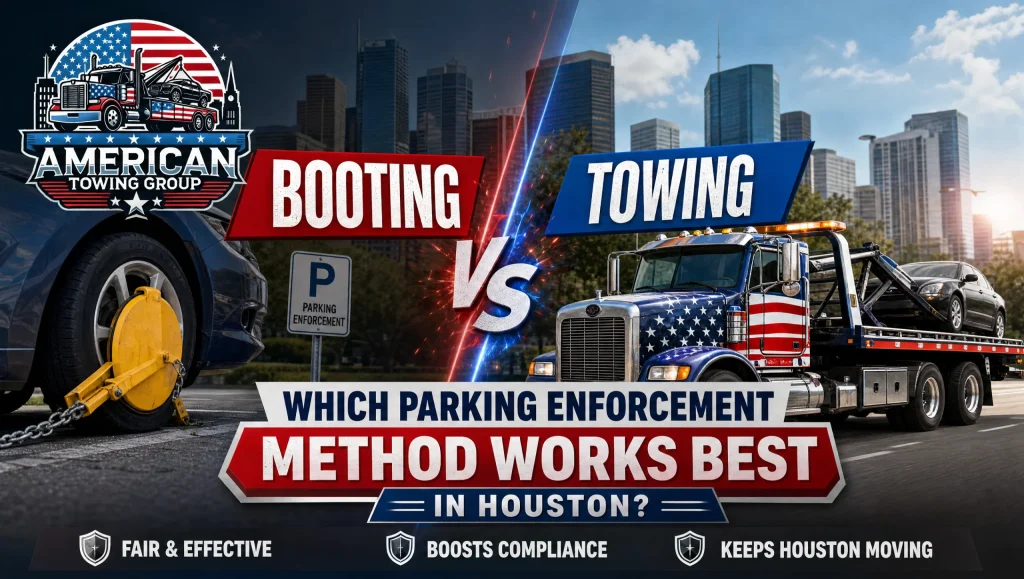
Booting and towing serve different goals—American Towing Services Group helps Houston communities choose the right approach for each situation.
24/7 parking lot towing and rapid response
- Based in Houston, we provide 24/7 parking lot towing for apartments and residential communities to remove unauthorized vehicles quickly and respectfully—minimizing disruption for residents and staff.
- When access is blocked or safety is on the line, our fast towing response helps restore order. Learn more about our 24/7 parking lot towing services here.
Regular patrols, permit management, and signage installation
- We offer regular patrols and monitoring to address violations swiftly.
- Our team supports parking permit management and can install compliant signage tailored to your property layout.
Customized plans, transparent communication, and reports
- We build customized parking solutions for property managers, with transparent communication at every step.
- Expect real-time notifications and comprehensive reports so you can track actions without late-night calls or guesswork.
Cost-effective subscription options with no hidden fees
- Ask about our cost-effective subscription plans designed for predictable budgeting—no hidden fees and no surprises.
For 24/7 parking lot towing, apartment towing in Houston, and compliant support, visit: https://americantowinggroup.com/
For reliable parking enforcement and professional towing services in Houston, see: https://americantowinggroup.com/towing-services-for-reliable-parking-enforcement/
Practical Decision Framework for Houston Properties
Clarify property goals and pain points
- What matters most right now—space availability, fairness to permit holders, faster turnover, or fewer after-hours calls?
- Identify the top three violation types on your lot and rank them by risk: safety, access, fairness.
Map violations to appropriate enforcement actions
- Immediate towing: Fire lanes, blocked gates, ADA access violations, repeat offenders in reserved spots.
- Warning → towing: First-time unauthorized parking in permit areas, visitor time-limit overages where space is constrained.
- Booting (if used): Short-stay control where the owner is likely on-site and safety or access aren’t compromised.
Define documentation, communication, and review cadence
- Standardize photo angles, timestamps, and notes. Use digital logs for consistency and easy reporting.
- Set a communications plan: who gets notified, what they see, and when.
- Review results monthly: violations by type, repeat rates, and resident feedback. Adjust patrols, signage, or policy language based on real patterns.
Houston-specific scenarios to guide Booting vs Towing Houston choices
- Evening peak at apartments along major corridors: Prioritize towing for blocked gates and reserved spaces to keep residents moving during rush-hours.
- Mixed-use locations near popular dining or event hubs: Booting can deter casual abuse by short-term visitors while allowing quick on-site resolution.
- Weather events and emergency access: During heavy storms or hurricane prep, towing is the safest option for vehicles blocking emergency lanes or generator access.
Quick-reference checklist for managers
- Confirm signage at every entrance and hot spot clearly states restrictions and enforcement methods.
- Verify permit systems and guest pass workflows; update rosters monthly.
- Set patrol times aligned to peak violation windows (evenings/weekends).
- Predefine which violations trigger towing, which allow for booting, and which warrant a warning.
- Use real-time notifications and keep a searchable photo log for each action.
Myth vs Fact: Parking Enforcement in Houston
- Myth: “Towing is always too aggressive.”
Fact: Towing is the appropriate—and sometimes required—response when safety or access is blocked. Applied consistently with clear signage and documentation, it restores fairness and keeps emergency paths open. - Myth: “Booting is always the friendlier option.”
Fact: Booting can be less disruptive, but it still ties up a space. In dense apartment lots, towing may be the only way to free reserved or ADA spaces promptly. - Myth: “If it’s on private property, anything goes.”
Fact: Houston and Texas rules still apply. Signage, documentation, and due process matter. Always verify current requirements and keep thorough records.
First-Hand Experience from the Field
On a recent Houston apartment patrol, our team responded to repeated unauthorized parking in reserved spots. After confirming permits and signage, we documented violations with photos and timestamps. Implementing a clear warning protocol followed by towing for repeat offenses reduced complaints and freed up resident spaces within a week, while our real-time notifications kept the property manager updated without late-night calls.
Topical Deep Dives You Can Use
- Remove unauthorized vehicles the right way: https://americantowinggroup.com/unauthorized-towing-mastering-legal-tow/
- Abandoned vehicle guidance and towing laws explained: https://americantowinggroup.com/abandoned-car-removal-ultimate-guide-to/
- Towing tips and best practices for managers: https://americantowinggroup.com/towing-tips/
- How timely vehicle removal impacts property value: https://americantowinggroup.com/timely-vehicle-removal-maximizing-proper/
Houston Parking Policy Building Blocks
- Build a signage compliance checklist tailored to your entrances, visitor areas, and hot spots.
- Draft a permit system guide for residents, visitors, and vendors; align terms with your enforcement ladder.
- Publish a short policy summary for residents with plain-language do’s/don’ts and retrieval steps.
- Consider case studies on progressive enforcement to show residents your approach is consistent and fair.
Conclusion: Booting vs Towing Houston—Choosing the Right Fit
Booting vs Towing Houston ultimately comes down to matching the method to your goals, the risk of each violation, and local compliance requirements. Use towing when safety or access is compromised, or when repeat violations demand a stronger deterrent. Consider vehicle immobilization for short-stay control when the owner is on-site and the space isn’t critically limited. Whatever you choose, set clear signage, document every action with photos and timestamps, and communicate consistently.
If you manage apartments or residential communities in Houston and want a compliant, low-disruption plan, we’re here to help with 24/7 parking lot towing, regular patrols, permit management, signage, and transparent reporting. Let’s build a customized approach that keeps your lot fair, safe, and predictable—without hidden fees.
Frequently Asked Questions
What’s the difference between booting and towing on private property in Houston?
Short answer: Booting immobilizes a vehicle on-site; towing removes it to a storage facility.
Expanded: In the booting vs towing Houston decision, booting keeps the car in place until the owner resolves the issue, while towing immediately clears the space by moving the vehicle off property. Both require compliant signage, documentation, and clear retrieval instructions under Houston and Texas rules.
When should I choose towing over booting?
Short answer: Tow when safety or access is blocked, or for repeat violators.
Expanded: Towing is the stronger deterrent and the right call for fire lanes, blocked gates, dumpsters, ADA access, or reserved spaces, and when warnings haven’t worked. It restores access immediately and reduces the chance of on-site confrontations, especially after hours.
When does booting make more sense?
Short answer: Use booting for short-stay control when the owner is likely nearby and the space isn’t urgently needed.
Expanded: Booting can resolve first-time or low-severity violations on-site without a trip to a storage facility. It’s helpful in mixed-use or visitor zones where quick owner contact is likely, but it’s less ideal if you need the space right away or there’s a safety concern.
Which option causes less disruption for residents?
Short answer: Booting is less disruptive to the violator; towing is less disruptive to the property.
Expanded: Booting lets the violator handle the issue on-site. Towing, while tougher on the violator, quickly frees reserved and ADA spaces and clears blockages—often the fairest result for residents waiting on their spots.
Is booting or towing more compliant with Houston and Texas rules?
Short answer: Both can be compliant if you meet current notice, signage, and documentation requirements.
Expanded: Compliance hinges on proper signage, clear policies, documented authorization, and thorough records (photos, timestamps, locations). Laws and local rules change, so verify current City of Houston and State of Texas requirements with counsel before updating your policy.
How should we set up a progressive enforcement policy?
Short answer: Start with education and warnings, then escalate to booting or towing based on risk.
Expanded: Publish a clear ladder: warnings for first-time or minor issues, towing for safety risks and repeat violations, and booting as an intermediate step if it fits your goals. Consistent application, clear signs, and time-stamped documentation build trust and reduce disputes. For best-practice tips, see: https://americantowinggroup.com/private-property-parking-powerful-enfo/
What signage and documentation do we need before enforcing?
Short answer: Post clear rules at entrances and hotspots, and document every action with photos and timestamps.
Expanded: Signs should state restrictions (permit-only, visitor limits, fire lanes), enforcement methods (booting, towing, or both), and retrieval instructions. Keep searchable logs with photos of the scene, plate, and signage, plus personnel IDs. Regular audits help ensure consistency.
How do costs typically compare for properties?
Short answer: Violators pay boot or tow/storage fees; properties should budget for signage and vendor programs.
Expanded: With booting, the space remains occupied until resolved; with towing, space is freed immediately but customer-service interactions can be more intense. Evaluate vendor terms for transparency—avoid hidden fees. American Towing Services Group offers cost-effective subscription options with no hidden fees.
What should we do after hours or during safety-sensitive situations?
Short answer: Towing is usually the safer, faster option.
Expanded: After hours or during severe weather and emergency access needs, towing removes the issue entirely, reduces on-lot confrontations, and keeps emergency paths clear. Ensure your signage and policies reflect these triggers ahead of time.
Are there effective alternatives or complements to reduce enforcement incidents?
Short answer: Yes—use digital permits, visitor pass systems, regular patrols, and real-time alerts.
Expanded: Smart permit tools, license-plate recognition, and routine patrols reduce confusion and disputes by creating a clear audit trail. For practical visitor solutions, see: https://americantowinggroup.com/visitor-parking-mastering-visitor-par/ and for tech trends: https://americantowinggroup.com/smart-towing-revolutionizing-parking-sma/
Do you provide 24/7 towing and patrol support for Houston apartments and communities?
Short answer: Yes—American Towing Services Group offers 24/7 parking lot towing, regular patrols, permit management, and signage.
Expanded: Based in Houston, we respond quickly, communicate transparently with real-time notifications and reports, and build customized plans without hidden fees. Learn more: https://americantowinggroup.com/ and https://americantowinggroup.com/towing-services-for-reliable-parking-enforcement/
What have you seen work best in Houston complexes?
Short answer: A published ladder—warn first, then tow for safety and repeat issues—paired with strong signage and digital permits.
Expanded: In practice, we’ve seen that clearly posted rules, a simple warning step, and decisive towing for blocked access or repeat violations reduce complaints and free up resident spaces quickly. Real-time notifications keep managers informed without late-night surprises. For legal towing guidance, visit: https://americantowinggroup.com/unauthorized-towing-mastering-legal-tow/
