
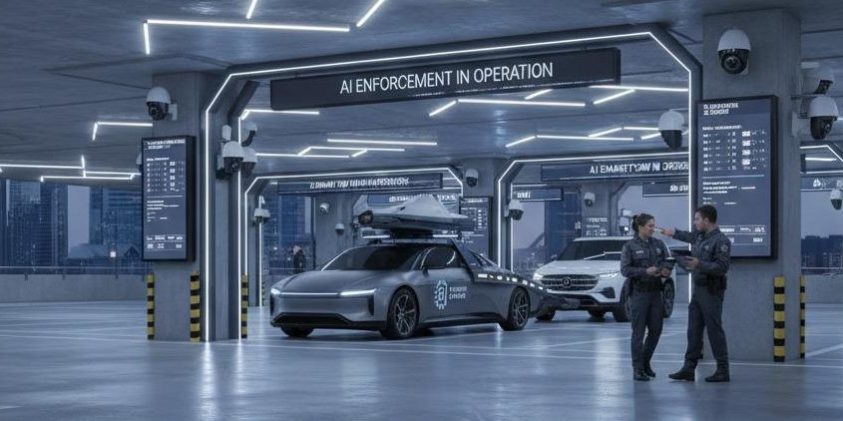
Revolutionizing Parking Enforcement: How AI Enforcement and Smart Towing Are Transforming Urban Mobility
As urban centers continue to grow and evolve, the demand for efficient, responsive, and intelligent parking enforcement solutions has never been greater. Traditional methods of monitoring and managing parking violations are increasingly proving inadequate in the face of rising vehicle numbers and limited space. In response, cities are turning to smart technology to revolutionize parking lot towing and enforcement. At the forefront of this transformation are artificial intelligence (AI) enforcement systems and smart towing technologies, which together are reshaping the landscape of urban mobility.
One of the most significant advancements in this area is the integration of AI-powered surveillance and data analytics into parking enforcement operations. These systems utilize high-resolution cameras, license plate recognition software, and real-time data processing to monitor parking lots with unprecedented accuracy. By automating the identification of violations such as expired meters, unauthorized parking in reserved spaces, or overstays in time-limited zones, AI enforcement reduces the need for manual patrols and minimizes human error. Moreover, these systems can operate continuously, ensuring consistent enforcement and freeing up personnel for other critical tasks.
In addition to improving accuracy, AI enforcement also enhances the speed and efficiency of response. When a violation is detected, the system can instantly alert towing operators, dispatching them to the location with precise information about the offending vehicle. This real-time communication not only accelerates the towing process but also reduces congestion and improves traffic flow within busy urban areas. Furthermore, by integrating with mobile apps and digital payment platforms, these systems can notify vehicle owners of infractions and provide options for immediate resolution, potentially avoiding the need for towing altogether.
Complementing AI enforcement is the rise of smart towing technologies, which are designed to streamline the towing process and improve transparency. Modern tow trucks are now equipped with GPS tracking, automated vehicle identification systems, and digital documentation tools. These features allow for more efficient route planning, reduce response times, and ensure that every step of the towing process is recorded and verifiable. For city officials and residents alike, this level of accountability fosters greater trust in the system and helps to mitigate disputes.
Moreover, smart towing solutions are increasingly being integrated into broader smart city initiatives. By connecting with traffic management systems, parking databases, and urban planning tools, these technologies contribute to a more holistic approach to mobility. For instance, data collected from AI enforcement and towing operations can be analyzed to identify patterns in parking behavior, inform policy decisions, and optimize the allocation of parking resources. This data-driven approach not only enhances enforcement but also supports long-term urban planning goals.
As these technologies continue to mature, their impact on urban mobility is becoming more pronounced. Cities that adopt AI enforcement and smart towing are experiencing reduced congestion, improved compliance with parking regulations, and more efficient use of public space. While challenges remain—such as ensuring data privacy and managing the costs of implementation—the benefits of these innovations are clear. By embracing smart technology, municipalities are not only modernizing parking enforcement but also laying the groundwork for more sustainable and livable urban environments.
The Rise of Digital Tow Systems: Enhancing Efficiency and Parking Innovation Through Automated Towing
As urban centers continue to grow and vehicle ownership rises, the demand for efficient parking management has never been greater. In response to this challenge, smart technology is transforming the towing industry, particularly through the rise of digital tow systems. These systems are not only enhancing operational efficiency but also driving innovation in how parking lots are monitored and managed. By integrating automation, real-time data, and advanced communication tools, digital tow systems are reshaping the landscape of parking enforcement and vehicle recovery.
One of the most significant advantages of digital tow systems is their ability to streamline the towing process through automation. Traditional towing methods often rely on manual reporting, delayed response times, and inconsistent enforcement. In contrast, digital systems utilize license plate recognition (LPR) technology, geofencing, and cloud-based platforms to identify violations instantly and dispatch tow trucks with minimal human intervention. This automation reduces the time between a parking infraction and vehicle removal, thereby improving turnover rates in high-demand parking areas and ensuring that spaces are used efficiently.
Moreover, these systems offer enhanced transparency and accountability for both property owners and vehicle owners. Through mobile applications and web portals, users can access real-time updates on towing activity, view photographic evidence of violations, and receive notifications about their vehicle’s status. This level of visibility helps to mitigate disputes and fosters a more equitable enforcement process. For property managers, digital tow systems provide detailed analytics and reporting tools that allow for better decision-making and policy adjustments based on actual usage patterns and enforcement outcomes.
In addition to improving enforcement, digital tow systems are contributing to broader smart city initiatives by integrating with other urban infrastructure. For example, some platforms are designed to communicate with parking sensors, traffic management systems, and municipal databases. This interconnectedness enables a more holistic approach to urban mobility, where data from towing operations can inform city planning, reduce congestion, and enhance public safety. As cities strive to become more sustainable and efficient, the role of intelligent towing solutions becomes increasingly vital.
Furthermore, the adoption of digital tow systems is fostering innovation in the towing industry itself. Companies are investing in electric and hybrid tow trucks, automated dispatch software, and predictive analytics to optimize fleet performance. These advancements not only reduce environmental impact but also lower operational costs and improve service reliability. As a result, towing companies are better equipped to meet the evolving needs of modern cities and their residents.
Despite these benefits, the implementation of digital tow systems is not without challenges. Concerns around data privacy, system integration, and user adoption must be carefully addressed to ensure successful deployment. However, as technology continues to advance and stakeholders recognize the value of smart enforcement tools, the momentum behind digital towing solutions is expected to grow.
In conclusion, the rise of digital tow systems marks a pivotal shift in parking lot management and urban mobility. By leveraging automation, real-time data, and integrated platforms, these systems are enhancing efficiency, promoting innovation, and supporting the development of smarter, more responsive cities. As the technology matures, its impact on the towing industry and urban infrastructure will likely become even more profound.
Parking Tech Breakthroughs: Exploring the Future of Smart Towing and AI-Driven Enforcement Solutions
As urban centers continue to grow and vehicle ownership rises, the demand for efficient parking management has never been greater. In response, the towing industry is undergoing a significant transformation, driven by advancements in smart technology and artificial intelligence. These innovations are not only streamlining enforcement processes but also enhancing the overall efficiency and fairness of parking lot management. As part of the July Series #50, this article delves into the latest breakthroughs in smart towing and AI-driven enforcement solutions, offering a glimpse into the future of parking technology.
One of the most notable developments in this space is the integration of AI-powered license plate recognition (LPR) systems. These systems utilize high-resolution cameras and machine learning algorithms to automatically identify and record vehicle license plates. By doing so, they enable real-time monitoring of parking lots, allowing for immediate detection of unauthorized vehicles or expired permits. This level of automation significantly reduces the need for manual patrols, thereby lowering operational costs and minimizing human error. Moreover, LPR systems can be integrated with centralized databases, ensuring that enforcement actions are based on accurate and up-to-date information.
In addition to LPR, smart sensors embedded in parking spaces are revolutionizing how occupancy is tracked. These sensors can detect whether a space is occupied and relay that information to a central management system. When combined with AI analytics, this data can be used to predict parking patterns, optimize space utilization, and identify potential violations before they escalate. For instance, if a vehicle remains in a time-limited space beyond the allowed duration, the system can automatically flag it for review or initiate a towing request. This proactive approach not only improves compliance but also enhances the user experience by ensuring that parking spaces are used efficiently.
Furthermore, mobile applications are playing an increasingly important role in smart towing solutions. These apps allow property managers and enforcement personnel to access real-time data, issue digital citations, and even authorize tows remotely. Some platforms also offer features for vehicle owners, such as notifications when their vehicle is at risk of being towed or the ability to resolve violations digitally. This two-way communication fosters greater transparency and reduces the likelihood of disputes, ultimately leading to a more equitable enforcement process.
Another promising trend is the use of predictive analytics to anticipate high-risk areas and times for parking violations. By analyzing historical data and current conditions, AI models can forecast when and where infractions are most likely to occur. This enables enforcement teams to allocate resources more effectively, focusing their efforts where they are needed most. In turn, this targeted approach enhances operational efficiency and ensures that enforcement actions are both timely and justified.
As these technologies continue to evolve, the future of parking lot towing appears increasingly intelligent and interconnected. The convergence of AI, real-time data, and mobile connectivity is setting a new standard for how parking enforcement is conducted. While challenges such as data privacy and system integration remain, the potential benefits in terms of efficiency, fairness, and user satisfaction are substantial. Ultimately, these smart technology trends are not only reshaping the towing industry but also contributing to smarter, more livable urban environments.
Discover the latest Smart Technology Trends in Parking Lot Towing in our July Series #50. Stay ahead with cutting-edge solutions transforming the towing industry.
