
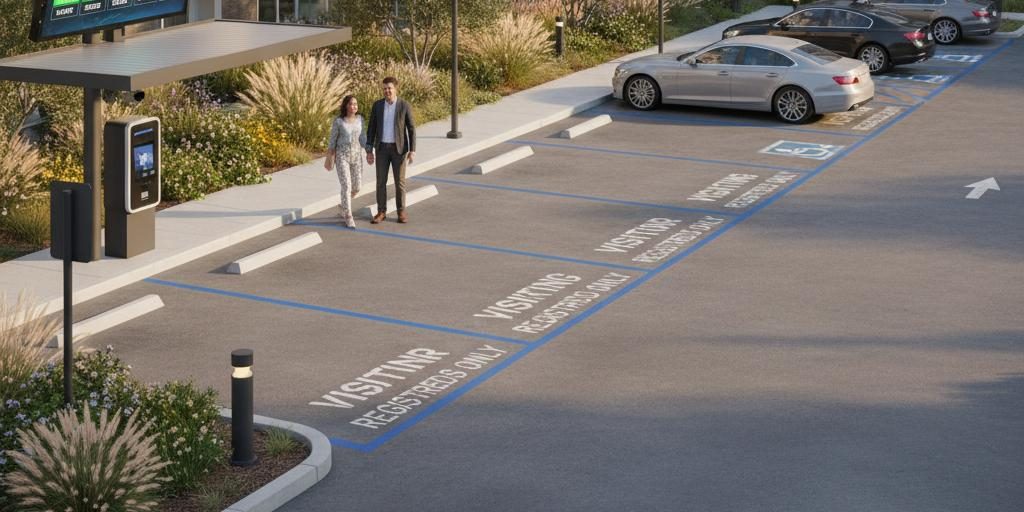
Enhancing Visitor Parking Efficiency Through Smart Parking Tech
Optimizing visitor parking in apartment complexes has become increasingly important as urban populations grow and residential developments become denser. One of the most effective ways to enhance the efficiency of visitor parking is through the integration of smart parking technology. By leveraging modern innovations, property managers can streamline parking operations, reduce congestion, and improve the overall experience for both residents and their guests.
To begin with, smart parking systems utilize sensors, cameras, and real-time data analytics to monitor parking space availability. These technologies provide accurate, up-to-the-minute information about which spaces are occupied and which are free. As a result, visitors can be directed to available spots without the need to circle the lot, thereby reducing traffic within the complex and minimizing frustration. Moreover, this real-time visibility allows property managers to better understand usage patterns and make informed decisions about space allocation and future infrastructure improvements.
In addition to real-time monitoring, many smart parking solutions include mobile applications that allow visitors to reserve parking spots in advance. This feature not only enhances convenience but also ensures that guests have a guaranteed space upon arrival. For apartment complexes with limited visitor parking, this reservation system can help prevent unauthorized use of spaces and reduce conflicts between residents and guests. Furthermore, integrating these apps with access control systems can automate gate entry, allowing for a seamless and secure arrival process.
Another significant advantage of smart parking technology is its ability to enforce parking rules more effectively. License plate recognition (LPR) systems can automatically identify vehicles and verify whether they are authorized to park in designated areas. This reduces the need for manual patrols and minimizes the risk of human error. Additionally, automated alerts can notify property managers of violations in real time, enabling quicker response times and more consistent enforcement. Over time, this leads to better compliance and a more orderly parking environment.
Energy efficiency and sustainability are also important considerations. Smart parking systems often incorporate LED signage and low-power sensors, which consume less energy than traditional lighting and surveillance methods. By reducing the environmental footprint of parking operations, apartment complexes can align with broader sustainability goals and appeal to environmentally conscious residents.
Moreover, the data collected by smart parking systems can be invaluable for long-term planning. Analytics dashboards can reveal peak usage times, average duration of stays, and frequency of repeat visitors. With this information, property managers can adjust policies, such as time limits or pricing for extended stays, to better match actual usage patterns. This data-driven approach ensures that parking resources are used optimally and that visitor needs are met without compromising resident satisfaction.
In conclusion, enhancing visitor parking efficiency through smart parking technology offers a multifaceted solution to a common challenge in apartment complexes. By improving space utilization, streamlining access, enforcing rules more effectively, and supporting sustainability, these systems provide tangible benefits for both property managers and residents. As technology continues to evolve, the adoption of smart parking solutions will likely become a standard practice in modern residential communities, setting a new benchmark for convenience and operational excellence.
Implementing Permit Systems for Better Guest Control in Residential Parking
Optimizing visitor parking in apartment complexes is a multifaceted challenge that requires thoughtful planning and effective management strategies. One of the most efficient methods for achieving better guest control in residential parking is the implementation of a structured permit system. By introducing a permit-based approach, property managers can not only regulate the use of limited parking spaces but also enhance security and ensure fair access for all residents and their guests.
To begin with, a permit system provides a clear framework for identifying authorized vehicles within the premises. This is particularly important in densely populated apartment complexes where parking spaces are often at a premium. Without a formal system in place, it becomes difficult to distinguish between resident vehicles, guest vehicles, and unauthorized users. By issuing temporary permits to visitors, management can maintain an accurate record of who is using the parking facilities at any given time. This not only deters unauthorized parking but also allows for more efficient monitoring and enforcement.
Moreover, implementing a permit system helps to prevent long-term occupancy of visitor spaces by non-guests. In many residential communities, it is not uncommon for residents to use visitor parking for their own additional vehicles, thereby reducing availability for actual guests. A well-designed permit system can include time limits and usage restrictions that discourage such misuse. For instance, permits can be issued for specific durations—such as 24 or 48 hours—and can be tracked digitally to ensure compliance. This approach promotes equitable access and ensures that visitor parking serves its intended purpose.
In addition to improving space allocation, a permit system can significantly enhance the overall security of the apartment complex. When all vehicles are accounted for through a registration process, it becomes easier to identify unfamiliar or suspicious vehicles. This added layer of oversight can deter criminal activity and contribute to a safer living environment. Furthermore, digital permit systems can be integrated with surveillance and access control technologies, allowing for real-time monitoring and automated alerts in case of violations.
Another advantage of permit systems is their adaptability to the specific needs of a community. Property managers can tailor the rules and procedures based on the size of the complex, the number of available spaces, and the frequency of guest visits. For example, some communities may benefit from an online portal where residents can request and print guest permits, while others may prefer a mobile app that allows for instant issuance and tracking. This flexibility ensures that the system remains user-friendly while still maintaining control and accountability.
It is also worth noting that clear communication is essential when implementing a permit system. Residents should be informed about the new procedures, the rationale behind them, and the consequences of non-compliance. Educational materials, signage, and regular updates can help foster cooperation and minimize confusion. When residents understand that the system is designed to benefit the entire community, they are more likely to support and adhere to the new policies.
In conclusion, implementing a permit system for visitor parking is a practical and effective solution for managing guest access in residential complexes. By promoting fairness, enhancing security, and allowing for customized management, such systems play a crucial role in optimizing parking resources and improving the overall quality of life for residents and their guests.
Apartment Management Strategies for Optimizing Visitor Parking Spaces
Optimizing visitor parking for apartment complexes is a critical component of effective property management. As urban populations grow and residential developments become denser, the demand for convenient and accessible parking solutions has intensified. Apartment managers must therefore adopt strategic approaches to ensure that visitor parking is both efficient and equitable, enhancing the overall living experience for residents while accommodating guests in a practical manner.
To begin with, a thorough assessment of current parking usage is essential. Property managers should conduct regular audits to determine how often visitor spaces are used, at what times, and by whom. This data-driven approach allows for informed decision-making and helps identify patterns that may indicate misuse or underutilization. For instance, if visitor spaces are frequently occupied by residents, it may be necessary to implement stricter enforcement policies or revise parking permits to prevent unauthorized use.
Once usage patterns are understood, the next step involves clearly defining and communicating parking policies. Signage should be visible and unambiguous, outlining who may park in visitor spaces, for how long, and under what conditions. Additionally, providing residents with written guidelines ensures that expectations are uniformly understood. This transparency not only reduces confusion but also minimizes conflicts between residents and visitors.
Technology can also play a pivotal role in optimizing visitor parking. Digital parking management systems, such as mobile apps or online reservation platforms, allow residents to register their guests in advance. These systems can track the duration of each visit, issue temporary permits, and even alert management to potential violations. By automating these processes, property managers can reduce administrative burdens while maintaining tighter control over parking resources.
Moreover, implementing time limits for visitor parking can help increase turnover and availability. For example, allowing visitors to park for a maximum of 24 hours encourages short-term use and discourages long-term occupancy by non-residents. In cases where extended stays are necessary, a special permit system can be introduced, granting temporary exceptions while still maintaining oversight.
In addition to policy and technology, physical design improvements can further enhance visitor parking efficiency. Clearly marked spaces, directional signage, and designated visitor zones near building entrances contribute to a more organized and user-friendly environment. Where space permits, creating overflow parking areas or shared-use agreements with nearby facilities can provide additional capacity during peak times, such as holidays or community events.
Equally important is the role of enforcement in maintaining the integrity of visitor parking policies. Regular patrols, warning notices, and fines for violations serve as deterrents against misuse. However, enforcement should be balanced with a customer service mindset, ensuring that residents and their guests feel respected and supported rather than penalized.
Finally, ongoing communication with residents is vital. Soliciting feedback through surveys or community meetings can uncover concerns and suggestions that may not be immediately apparent to management. By involving residents in the decision-making process, property managers can foster a sense of shared responsibility and cooperation, ultimately leading to more effective and sustainable parking solutions.
In conclusion, optimizing visitor parking in apartment complexes requires a multifaceted strategy that combines data analysis, clear policies, technological tools, thoughtful design, and proactive communication. When executed effectively, these strategies not only improve parking availability but also contribute to a more harmonious and well-managed residential community.
Optimize your apartment complex’s visitor parking today—streamline access, reduce congestion, and enhance resident satisfaction. Don’t wait—take control now with expert solutions from our July Series #49.
Get Your Free Quote Now
