Choose Towing Company Houston: A Practical Vendor Checklist
How to Choose a Private Property Towing Company in Houston
Finding the right private property towing partner in Houston can feel complicated—especially when you’re balancing compliance, resident experience, and fast results across busy apartment lots and HOA communities. This guide is a practical vendor-selection handbook for property managers and boards. Use it to compare vendors side by side, ask the right questions, and move forward with confidence. If you’re evaluating options and asking how to choose towing company Houston decision-makers trust, the framework below will help you sort real quality from guesswork.
To choose a towing company in Houston for private property, look for a partner that can prove legal compliance, deliver fast 24/7 response, handle clear signage and permit management, provide professional patrols, and back everything with transparent reporting.
What “Right-Fit” Means for Houston Properties
Compliance and local knowledge come first
Houston-area properties operate under a mix of city requirements, county expectations, and community rules. A right-fit vendor understands how signage, tow authorization, and documentation must align with Houston norms and your property’s policies. They’ll help you install compliant signs at entrances and controlled spaces, set up a clean authorization flow, and maintain time-stamped evidence for each action—reducing disputes and protecting your team.
Resident experience and minimal disruption
A good parking enforcement partner works quietly in the background. Courteous patrols, clear communication, and a focus on education over confrontation keep traffic moving without stirring up resident frustration. Look for respectful onsite conduct and a vendor who can support your communications during policy changes or new permit rollouts.
Reliability that shows up in response times and reporting
Response-time targets matter, but so do the receipts: real-time notifications, photo logs, and monthly trend reports that show what happened and why. When a vendor documents well and reports consistently, you get fewer surprises and more predictable outcomes.
Vendor Checklist: How to choose towing company Houston
Licensing, insurance, and Houston-specific legal compliance
- Verify active licensing and sufficient insurance limits.
- Confirm the vendor’s process for staying current with Houston requirements for private property towing.
- Ask for sample notices, tow authorizations, and appeal support documents to gauge compliance maturity.
For a deeper dive on law-aligned process, see Mastering Legal Towing: Enforce Parking Laws & Remove Vehicles Right
Parking signage installation and permit management capabilities
- Will they install and maintain compliant parking signs with clear language, visibility, and access information?
- Can they manage physical and digital permits (including visitor codes) and keep your resident rosters synced?
Explore visitor parking permits and smart tech: https://americantowinggroup.com/visitor-parking-mastering-visitor-par/
Patrol schedules, escalation paths, and 24/7 coverage
- Confirm coverage during peak times (evenings, weekends, game days, and holidays).
- Review patrol frequency, routes, and escalation paths (warn, boot, tow—based on policy).
- Ensure genuine around-the-clock readiness, not just a voicemail handoff.
If you need immediate coverage, learn about 24/7 parking lot towing in Houston: https://americantowinggroup.com/
Response-time standards and service-level clarity
- Ask for written targets for dispatch, arrival, and case closure.
- Clarify how response-time performance is tracked and reported—monthly scorecards encourage accountability.
Communication: real-time notifications, photos, and comprehensive reports
- Require time-stamped photos before, during, and after action.
- Expect real-time notifications to your team (text/email/app) and a property portal.
- Monthly reports should include hot spots, repeat offenders, and recommendations to reduce violations over time.
Contract transparency: subscription plans, no hidden fees, termination terms
- Request clear pricing with no extras tucked into the fine print.
- If you choose a subscription plan, confirm what’s included (patrols, signage, permit support, reporting).
- Ensure fair termination language and a clean exit plan if the partnership isn’t a fit.
Apartment and residential community experience
- Look for demonstrated experience with apartments, HOAs, and mixed-use properties—each has unique rhythms and visitor patterns.
- Ask for examples of onboarding communities similar to yours (size, layout, resident mix).
Professionalism onsite: courteous conduct and property care
- Uniforms, marked vehicles, and polite engagement reduce resident tension.
- Property care shows up in details—no blocked drive lanes, careful movement around landscaping, and adherence to quiet hours where possible.
For additional private property parking enforcement tips, visit: https://americantowinggroup.com/private-property-parking-powerful-enfo/
Questions to Ask a Potential Parking Enforcement Partner
How do you verify authorization before a tow?
- Look for a defined process that confirms property-level authorization, validates signage, and checks permit/visitor records before any action.
- Ask for a flowchart or SOP—this protects your property and your residents.
What are your documentation standards (time-stamped photos, logs)?
- Expect a minimum set of time-stamped images (context, vehicle ID, violation, and final condition), plus digital logs and GPS/location data.
- Confirm retention policies and how you can retrieve records quickly.
How do you handle disputes and resident education?
- Ask how the vendor de-escalates in the field and supports your office team post-incident.
- Clear, friendly explanations and accessible appeals information reduce friction and build trust.
What KPIs do you report to property managers monthly?
- Examples: average response time, patrol coverage, violation categories, repeat incidents, and recommendations for signage/permit adjustments.
- A vendor who brings data and trends will help you improve over time.
For broader reporting ideas, see Towing Tips and Best Practices: https://americantowinggroup.com/towing-tips/
Evaluating Technology and Reporting
Digital permits, visitor management, and patrol apps
- Digital permits reduce manual errors and speed up verification.
- Visitor codes with time windows curb long-stay abuses without punishing genuine guests.
- Patrol apps help standardize documentation and give you visibility.
Dashboards, trend reports, and audit-ready records
- You should be able to view current activity, historical logs, and photo evidence at a glance.
- Trend reports highlight problem zones and times so you can adjust policy or signage proactively.
Integration with property management workflows
- Ask how the vendor connects with your communication tools, resident portal, and after-hours protocols.
- Smooth integration means less back-and-forth for your team and faster resolution on the ground.
For a look at evolving tools, explore Smart Towing & AI Enforcement Trends: https://americantowinggroup.com/smart-towing-revolutionizing-parking-sma/
Compliance and Risk Management in Houston
Signage placement, visibility, and code alignment
- Place signs at all entrances and near controlled areas (reserved, fire lanes, accessible spaces), at a readable height and with lighting that matches the conditions common on Houston properties.
- Use clear language on towing criteria, contact info, and permit rules. (Texas Occupations Code 2308 (Towing and Booting Act))
Tow authorization processes that protect the property
- Define who can authorize which actions (warning, boot, tow) and how exceptions are handled.
- Keep authorization records tied to incident logs and photos to streamline any follow-up.
Documentation to support appeals and legal inquiries
- Maintain audit-ready records: photos, patrol logs, authorization forms, and communication notes.
- Your vendor should help prepare concise packets to close the loop quickly when questions arise.
Need a legal foundations refresher? Review Mastering Legal Towing: Enforce Parking Laws & Remove Vehicles Right at https://americantowinggroup.com/unauthorized-towing-mastering-legal-tow/ and Abandoned Car Removal & Towing Laws Explained at https://americantowinggroup.com/abandoned-car-removal-ultimate-guide-to/
How to Pilot and Onboard a New Vendor
Start with a limited-scope trial and defined KPIs
- Choose a 60–90 day pilot covering a subset of buildings or lots.
- Set clear KPIs: response times by time of day, patrol frequency, dispute rates, and documentation completeness.
- Use a scorecard to compare against your prior baseline.
Resident communication plan before first patrol
- Announce new rules, timelines, and where to get permits or guest codes.
- Post a simple one-page explainer at mailrooms and lobbies; update your portal and send an email/SMS reminder.
- Reinforce that the goal is access and safety, not revenue or “gotchas.”
Review cadence, feedback loops, and adjustments
- Hold biweekly check-ins during the pilot to review incidents, photos, and hot spots.
- Adjust signage or permit rules where patterns emerge (e.g., weekend visitor surges).
- Decide on expansion only after the vendor consistently meets your KPIs.
For more on performance impact, see Maximizing Property Value: The Impact of Timely Vehicle Removal and Towing Response Times at https://americantowinggroup.com/timely-vehicle-removal-maximizing-proper/
First-hand field perspective
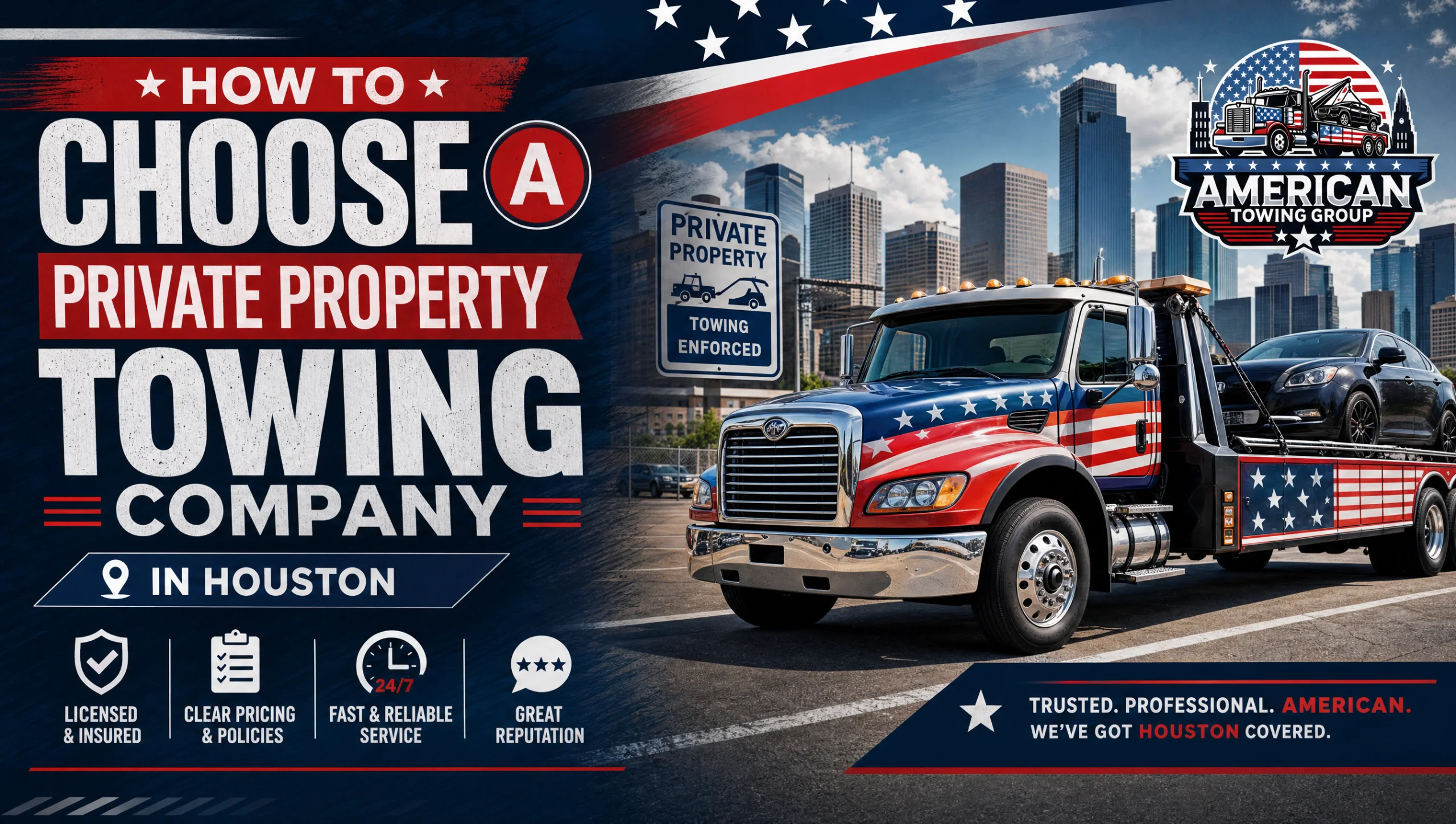
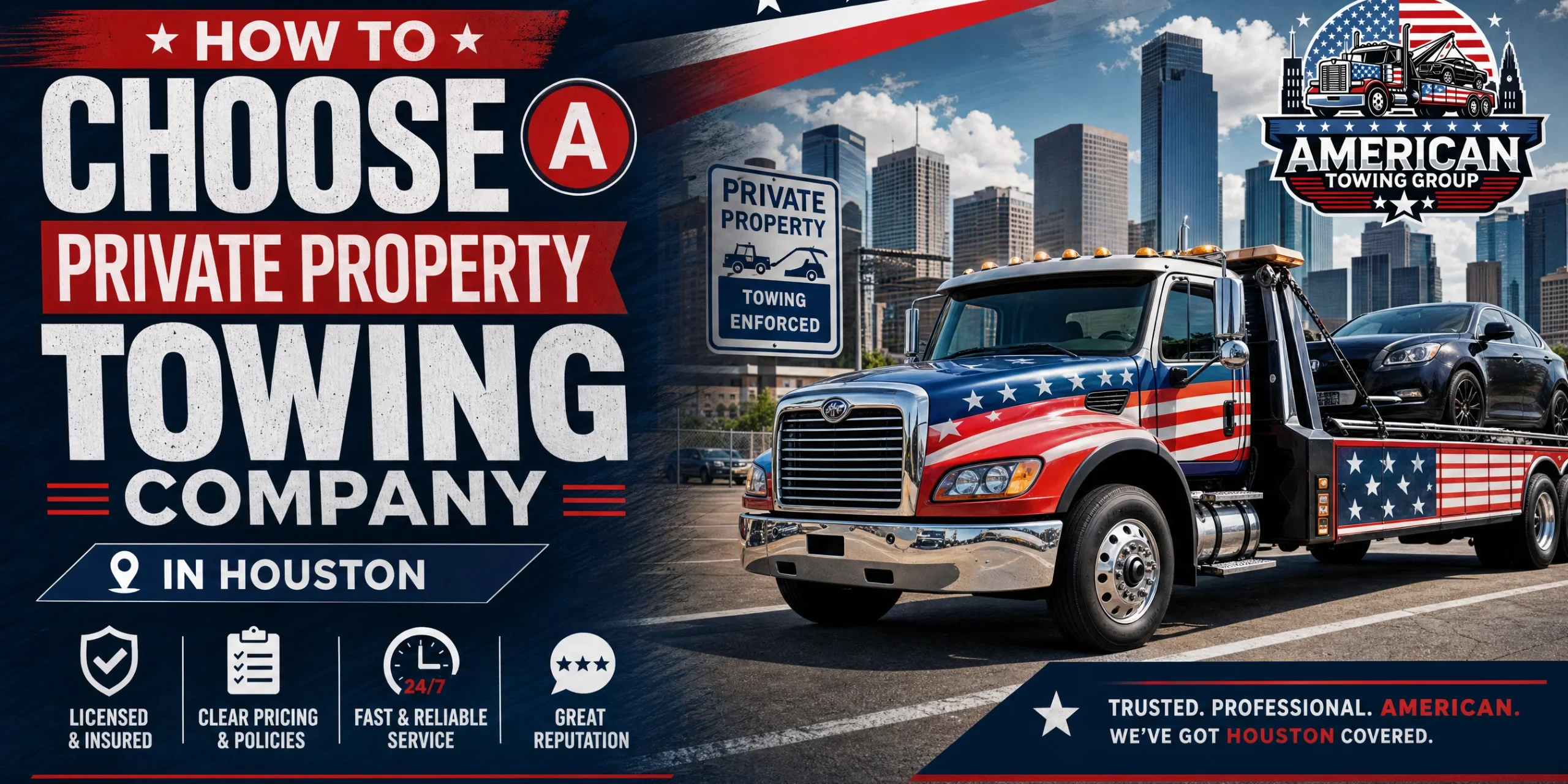
How Houston property managers can choose a reliable towing company: vendor checklist, compliance checks, and a trusted parking enforcement partner.
On a typical Friday evening patrol at a west Houston apartment community, our team checks permit zones first, snaps time-stamped photos at each violation, and posts updates to the property manager’s portal. Clear signage at entrances and visitor spaces means most issues are resolved with a quick verification instead of a tow, keeping traffic moving and residents calm.
Myth vs. Fact: Private Property Towing
- Myth: “Fast towing means aggressive enforcement.”
Fact: Speed comes from clear rules, good signage, and well-documented processes—not confrontation. - Myth: “Digital permits are confusing for residents.”
Fact: With a short rollout plan and simple instructions, digital permits reduce headaches and cut down on appeals. - Myth: “All towing vendors are the same.”
Fact: Differences in documentation, reporting, and onsite conduct have a major impact on resident satisfaction and dispute rates.
Why American Towing Services Group in Houston
24/7 parking lot towing, regular patrols, and fast, reliable response
- We provide around-the-clock private property towing and routine patrols designed to minimize disruption and keep lots clear. Learn more about 24/7 parking lot towing in Houston: https://americantowinggroup.com/
Permit management, parking signage, and customized solutions
- From installing compliant signage to managing resident and visitor permits, we tailor solutions to your community’s rules and layout.
Transparent communication with real-time notifications and reports
- Property managers receive real-time updates and comprehensive monthly reports that support audits and continuous improvement.
Explore what makes a reliable parking enforcement partner: https://americantowinggroup.com/towing-services-for-reliable-parking-enforcement/
Cost-effective subscription plans with no hidden fees
- We offer straightforward subscription plans—no surprises—so you can plan your budget and evaluate performance with clarity.
Houston-Specific Compliance: A Quick Explainer
- Signage basics: Place readable, well-lit signs at all entrances and controlled spaces. Include towing criteria, contact info, and permit instructions.
- Authorization flow: Define who authorizes actions, when to escalate from warning to tow, and how to log approvals.
- Documentation expectations: Capture time-stamped photos (context, plate/VIN, violation, final condition), GPS-tagged logs, and communication notes. Store records for quick retrieval during appeals or board reviews.
Vendor Checklist Highlights (print-friendly)
- Verify licensing, insurance, and Houston-specific compliance
- Confirm signage installation and parking permit management
- Assess 24/7 coverage, patrol schedules, and response-time targets
- Require time-stamped photos, real-time notifications, and monthly reports
- Review contract transparency, subscription pricing, and no hidden fees
- Validate apartment/HOA experience and courteous onsite conduct
If you want to go deeper on planning and policy, these resources may help:
- Private Property Parking Control: Powerful Enforcement Tips at https://americantowinggroup.com/private-property-parking-powerful-enfo/
- Mastering Visitor Parking: Smart Tech & Permits for Apartments at https://americantowinggroup.com/visitor-parking-mastering-visitor-par/
- Revolutionizing Parking: Smart Towing & AI Enforcement Trends at https://americantowinggroup.com/smart-towing-revolutionizing-parking-sma/
- Towing Tips and Best Practices at https://americantowinggroup.com/towing-tips/
Conclusion: Choose a Towing Company in Houston with Confidence
When you choose towing company Houston property managers rely on, prioritize visible compliance, respectful patrols, and clear documentation. The right vendor will help you install proper signage, manage permits, deliver reliable 24/7 response, and keep your board informed with real-time updates and monthly reports—without disrupting residents. If you’re ready to evaluate a partner built around Houston properties, schedule a calm, no-pressure consult with American Towing Services Group. We’ll walk your lot, review your goals, and craft a practical plan that fits your community.
[Image suggestion: A simple vendor scorecard or patrol app screenshot; alt text: choose towing company Houston vendor checklist]
Frequently Asked Questions
How do I choose a towing company in Houston for private property?
Short answer: Prioritize legal compliance, 24/7 response, signage and permit support, professional patrols, and transparent reporting.
Expanded: A right-fit partner for Houston properties can prove licensing and insurance, meets Houston-specific towing requirements, installs compliant signage, manages permits, offers true 24/7 coverage, and documents every action with time-stamped photos and monthly reports. Use the vendor checklist in the article and compare written SLAs side by side to choose towing company Houston communities can trust.
What licenses and insurance should a private property towing vendor have in Houston?
Short answer: Active towing licenses and sufficient insurance limits that meet or exceed local requirements.
Expanded: Verify the company’s current licenses, insurance certificates, and how they monitor Houston-specific rules. Ask for sample tow authorizations and appeal support documents to gauge compliance maturity. For legal process essentials, see Mastering Legal Towing: Enforce Parking Laws & Remove Vehicles Right: https://americantowinggroup.com/unauthorized-towing-mastering-legal-tow/
What should compliant parking signage include in Houston?
Short answer: Clear towing criteria, contact info, and permit rules—visible at entrances and controlled spaces.
Expanded: Place readable, well-lit signs at entrances and near reserved, fire lane, and accessible spaces. Include who may tow, how to contact the provider, and the rules that trigger enforcement. The right vendor will install and maintain compliant signs and keep them current with your policies.
How fast should a parking enforcement partner respond, and how is it measured?
Short answer: Expect written targets for dispatch, arrival, and case closure, plus monthly scorecards.
Expanded: Look for SLAs that specify response by time of day and day of week, and reporting that tracks performance (average arrival times, closure rates). Reliable vendors provide real-time notifications, photo logs, and monthly trend reports so you can see exactly what happened and when.
What documentation should I expect for each tow or warning?
Short answer: Time-stamped photos, digital logs, GPS/location data, and clear authorization records.
Expanded: At minimum, request context photos, vehicle ID (plate/VIN), violation evidence, and final condition images. Tie every action to a documented authorization. Vendors should retain records and make them easy to retrieve during appeals or audits. For additional tips, visit Towing Tips and Best Practices: https://americantowinggroup.com/towing-tips/
Do I need digital permits, or will hang-tags work?
Short answer: Digital permits improve verification and reduce disputes; hang-tags can work with consistent controls.
Expanded: Digital permits and visitor codes with time windows reduce manual errors and long-stay abuses. If you use physical permits, ensure current rosters, clear visitor rules, and fast verification. Learn more about visitor permits and smart tools: https://americantowinggroup.com/visitor-parking-mastering-visitor-par/
How do vendors handle disputes and resident communication?
Short answer: With de-escalation in the field, clear explanations, and accessible appeals information.
Expanded: Ask for the vendor’s SOP for handling disputes and how they support your office after an incident. Courteous, uniformed teams and clear resident messaging—especially during permit rollouts—keep friction low and trust high.
What should be in a transparent contract or subscription plan?
Short answer: Clear inclusions, no hidden fees, fair termination terms, and reporting expectations.
Expanded: Request line-item pricing, what’s covered (patrols, signage, permits, reporting), and how performance is reviewed. Subscription plans should make budgeting predictable without extras buried in fine print. See what reliable parking enforcement looks like: https://americantowinggroup.com/towing-services-for-reliable-parking-enforcement/
How do I pilot a new towing vendor without disrupting residents?
Short answer: Run a 60–90 day trial with defined KPIs and a resident communication plan.
Expanded: Start with select lots or buildings, set KPIs (response times, patrol frequency, dispute rates, documentation completeness), and hold biweekly reviews. Announce timelines, where to get permits/guest codes, and reinforce that the goal is access and safety. For performance context, visit: https://americantowinggroup.com/timely-vehicle-removal-maximizing-proper/
What does a typical patrol look like on a busy evening?
Short answer: Quiet, courteous checks of permits and hotspots, with photos and live updates to managers.
Expanded (field perspective): On a typical Friday evening at a west Houston apartment community, our team starts with permit zones, captures time-stamped photos at each potential violation, and posts updates to the property manager’s portal. Clear entrance and visitor signage often resolves issues with quick verification instead of a tow—keeping lanes clear and residents calm.
Can a towing company integrate with my property management tools?
Short answer: Many can, via dashboards, alerts, and simple portal access.
Expanded: Ask about integrations with your communication tools and after-hours protocols. You should be able to see current activity, retrieve historical logs and photos, and receive real-time alerts without extra steps. Explore evolving tech and AI trends: https://americantowinggroup.com/smart-towing-revolutionizing-parking-sma/
Where can I learn more about legal towing and abandoned vehicles in Houston?
Short answer: Review legal guides focused on authorization and abandoned-vehicle rules.
Expanded: Start with these resources for Houston-aligned best practices and documentation standards: Mastering Legal Towing: https://americantowinggroup.com/unauthorized-towing-mastering-legal-tow/ and Abandoned Car Removal & Towing Laws Explained: https://americantowinggroup.com/abandoned-car-removal-ultimate-guide-to/
